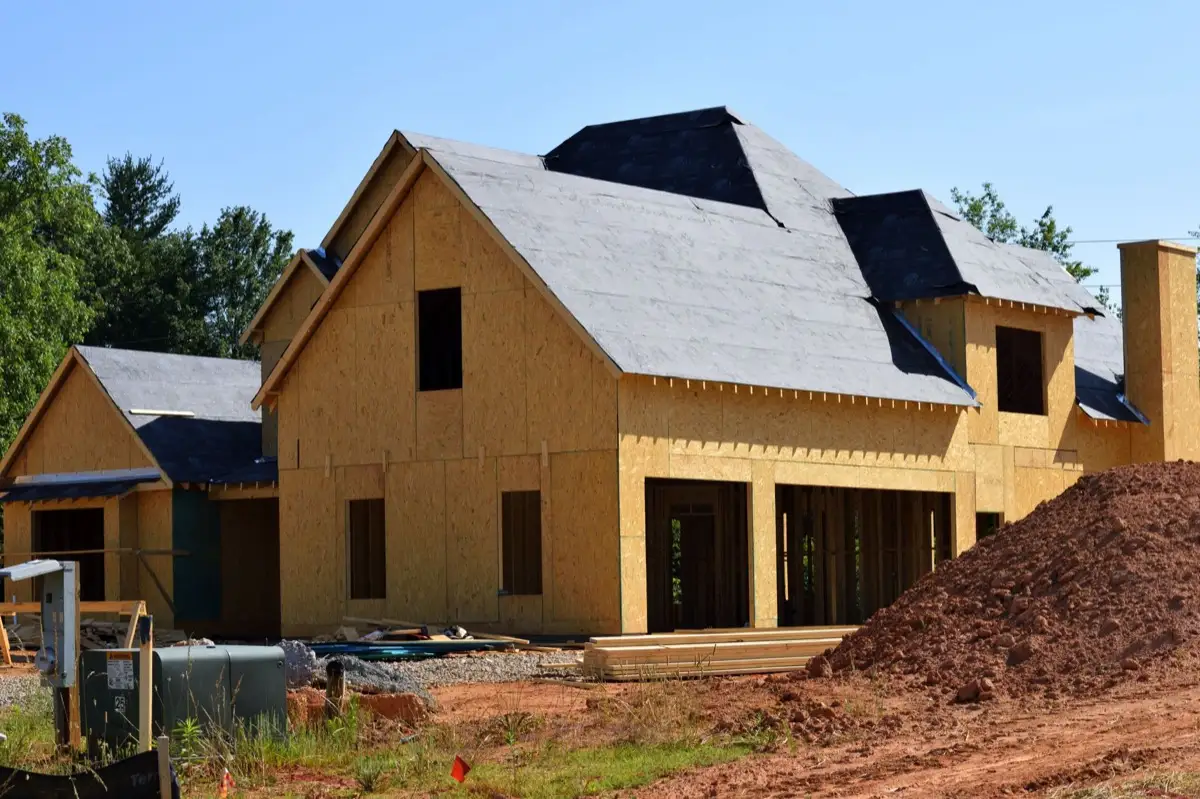
Asphalt roof replacement cost is decided by the roof, not by the house under it. Pitch, squares, tear-off layers, decking condition and flashing set the total before anyone picks a color, and those five are exactly what a thin quote leaves vague.
Here is the uncomfortable part of roof pricing. The three items that swing a bid hardest are the three a low bidder quietly leaves out, which means the cheapest number on your kitchen table is often the shortest scope rather than the best price.
Squares, not square feet
Every roofer prices in squares. One square is one hundred square feet of roof surface, measured on the slope rather than on the ground.
That distinction is not pedantic. Slope and overhangs add real area, so a two thousand square foot floor plan might carry twenty-two squares of roof on a shallow pitch and thirty on a steep one. Two identical houses on the same street can differ by a third in roof area for no reason a homeowner can see from the sidewalk.
The practical use of this is comparison. Ask each bidder for the square count they measured and the price per square they are using. Three totals that looked unrelated usually turn into three prices for slightly different quantities of the same work, and one of the three has measured the roof wrong.
Pitch changes the job, not just the area
Below roughly seven in twelve, a crew walks the roof and works at a normal pace. Above that, the job changes shape. Roof jacks go up, bundles get staged rather than carried, and everyone is in a harness.
Production per hour falls, and past about nine in twelve the labor line stops being proportional to area at all. It becomes a different job at a different rate, performed by a smaller pool of crews who are willing to do it.
Very low slope is its own premium in the opposite direction. Below the minimum slope the manufacturer allows, asphalt shingles will pass water no matter how carefully they were nailed, and the honest answer for that section is a membrane rather than more shingles. Porch roofs, patio covers and additions are where this shows up.
Tear-off layers, and the layover temptation
One layer comes off fast. Two layers is double the labor, double the dumpster and often double the disposal fee, and disposal is billed by weight rather than by area.
Ask every bidder how many layers they assumed. Where nobody states it, everybody assumed one, and the difference will surface as a change order on the second morning.
Going over the top of an existing roof rather than tearing off is legal in many places and is still usually the wrong purchase. A nail crossing two layers ends up holding the old shingle rather than the new one, and the extra mass holds heat against the deck.
The next replacement also costs more, because two layers come off instead of one. A layover buys a smaller invoice today at the cost of a worse roof for the whole of its life.
Decking is the honest unknown
Nobody can see the sheathing until the old roof is off. That is not a failure of estimating, it is the nature of the job, and the correct way to handle it is a stated price per sheet written into the contract before work starts.
Some roofs need zero sheets. Some need twenty, usually around chimneys, in valleys and anywhere an old leak was living. A bid with no decking line reads cheaper and is not, because the number is simply missing rather than absent.
While the deck is open, ask what else gets done. Re-nailing the sheathing to the current fastening schedule costs very little at that moment and is impossible afterward. On older houses, panels originally stapled down come up loose more often than not.
Flashing is where a cheap roof becomes an expensive ceiling
Sidewall, chimney, valley, step flashing, pipe boots. Each is either replaced or reused, and reused flashing is a leak with a date on it.
Pipe boots are the clearest example. The rubber collar splits from sun exposure long before the shingles wear out, so a roof can be perfectly sound and still be leaking through a part worth a few dollars. New boots on a new roof is not an upsell.
Read each quote for the word new beside each flashing item. Where a bid says "reuse existing" or says nothing, that is the gap between it and the higher number next to it.
Two ratings worth asking for on the shingle itself
UL 2218 grades impact resistance by dropping steel balls from a fixed height onto a fixed spot, and Class 4 is the top step. ASTM D7158 grades uplift, where Class D is ninety miles per hour and Class H is one hundred fifty.
A product can carry one of those and not the other. Impact resistance generally comes from flexibility, often polymer-modified asphalt, while wind resistance comes from mass, a wide sealant strip and a six-nail pattern. Shingles that do both well exist and are not the cheap ones.
Both numbers live on the manufacturer's data sheet, which any contractor can send you inside a minute. The one who will not send it is telling you something about the product or about themselves.
Read three bids as one scope
Write the scope yourself before you collect quotes. One page is enough: layers assumed, decking price per sheet, which flashings are new, underlayment type, nail count per shingle, starter at eaves and rakes, ridge ventilation, disposal, and cleanup.
Then ask each company to price your page rather than their own. The bid that suddenly grows was the one leaving something out, and you have found the gap before the work starts instead of during it.
There is a full breakdown of the drivers in our roof replacement cost guide, including the questions worth asking about ventilation while the roof is open.
When not to buy at all
A roof in its middle years with no fractured mat, no creased tabs and a seal that still holds does not need replacing because somebody knocked on the door after a storm.
Granule scatter in the gutters after the first heavy rain on a newer roof is normal wear. A single split pipe boot is a repair. A ridge cap that took a beating is a ridge cap. None of those is a reroof, and the price difference is not close.
If the only evidence anyone offers is a photograph shot from the driveway, ask to see the marked test squares and the results of lifting tabs at the rakes and hips. That evidence takes ninety minutes to collect on an average house, and a roofer who cannot produce it did not do the inspection.
One sequencing note if there is any chance of panels in your future. Putting an array on a roof with a few years left means paying to remove and reinstall it when the roof gets replaced, so the roof goes first. Our solar panel installation cost guide covers the rest of that ordering problem.
Ready for a free quote in Nationwide?
America's Home Savings — free estimate, clear scope, no pressure. Use the form on this page or jump to the homepage quote.
Related services in Nationwide
America's Home Savings money pages — go straight to the service you need.
- Roof Replacement →
Roof replacement cost is set by the roof, not by the house underneath it. Pitch, squares, tear-off layers, decking condition and flashing decide the bid before anyone picks a shingle color, and those five are exactly what a thin quote leaves vague.
- Solar Panels →
Solar panel installation cost is quoted two different ways, and only one of them lets you compare two companies. Ask every bidder for the system size in kilowatts and the gross price per watt before any incentive, because a total that has already had credits subtracted hides both the size and the markup.
- Replacement Windows →
Window replacement cost moves on three things: how many openings, what the frame is made of, and whether the crew is fitting an insert or doing a full-frame replacement. Energy efficient windows are the upsell inside every quote, and whether they pay for themselves depends on two numbers printed on a sticker rather than on anything in the brochure.
- Inground Pools →
Inground pool cost, as quoted, is the smallest number in the project. The shell is what the contract covers, and the deck, the fence, the water, the electrical work, the heater and the yearly running cost are what actually decide whether a pool fits the budget you had in mind.
- Pest Control →
Pest control cost is usually sold as a recurring plan, and the plan rather than the first visit is where the money is. Termite treatment cost is a separate purchase priced by the linear foot of foundation and by method, and of the two it is the one that is genuinely worth getting right.
Frequently asked questions
What unit is an asphalt roof priced in?
The square, which is one hundred square feet of roof surface rather than floor area. A two thousand square foot house is not a two thousand square foot roof, because pitch and overhangs add surface. The same floor plan can measure twenty-two squares or thirty depending on slope, which is why a price quoted over the phone from an address is a guess at the one quantity that matters most.
Why do two asphalt roof quotes differ so much?
Usually because they are not the same job. The three items that move a bid hardest are tear-off layers, decking replacement and flashing, and a low bid frequently assumes one layer, allows nothing for decking and reuses the flashing. Put every bid on one written scope before comparing totals, or you are comparing two different projects that happen to share a roof.
Should decking replacement be a separate line?
Yes, and it should be a stated price per sheet rather than a lump allowance. Nobody can see the sheathing until the old roof is off, so the honest way to handle the unknown is to fix the unit price in the contract. A bid with no decking line is not the cheaper bid. It is the bid with a change order already inside it.
Is a second layer of shingles ever a reasonable choice?
It is legal in many places and it is still usually the wrong call. A nail crossing two layers holds the old shingle rather than the new one, the added mass traps heat, and the next replacement costs more because two layers come off instead of one. It also hides whatever the deck is doing underneath. Layovers buy a lower invoice today and a worse roof for the rest of its life.
Does a steeper roof cost more?
Yes, for two reasons that stack. There is more surface area than the footprint suggests, and above roughly seven in twelve the crew needs roof jacks, staging and fall protection that slow every hour of work. Past about nine in twelve the labor line stops rising in proportion and becomes a different rate entirely. Very low slope is its own premium, because at some point shingles are the wrong product.
What should I do if a roofer only shows me photos from the ground?
Ask for the marked test squares and the tab lift results. A hail assessment is done by hand in ten-foot squares, counting fractures you find by feel, and a wind assessment is done by lifting tabs at the rakes and hips to see whether the seal still holds. Neither shows up in a photograph taken from a driveway. An inspector who cannot produce that evidence did not perform the inspection.
Local context
How this applies in Nationwide, US
Every article here is written from home savings work done in Nationwide and all fifty states, so the numbers reflect local labour, permit and material costs rather than a national average. Your own job can land either side of them depending on access, the condition of what is already there, and the materials you pick — UL 2218 Class 4 impact ratings, ASTM D7158 wind class ratings, NFRC U-factor and solar heat gain labels.
The way to turn any of this into a real answer is to have someone look at your actual situation. The free estimate is free, itemized and written down, with no deposit and no obligation. Call (866) 346-6987 or start on the America's Home Savings homepage.
Areas America's Home Savings covers
Nationwide first, then the surrounding communities of all fifty states. Each has its own page with local detail rather than a copy of this one:
Or jump to the full list of Nationwide services.
More from the America's Home Savings blog
- Vinyl Replacement Window Cost: Where the Money Actually Goes
Vinyl replacement windows are priced per opening, and the install method matters more than the brand. How to read a window quote and when to keep yours.
- The Federal Solar Tax Credit: Check It Before You Sign
The federal solar tax credit ended for expenditures made after 31 December 2025 under Public Law 119-21. What that changes in a quote, and the four things that decide a system now.
- Pool Resurfacing Cost: How to Tell the Surface Is Done
Pool resurfacing is priced by surface area and finish, and it arrives on a schedule. How to tell a worn surface from a failed one before you take a quote.
The America's Home Savings Team
home savings specialists serving Nationwide, US
Written by the America's Home Savings team — insured home savings pros serving Nationwide, US and the surrounding area.